
What is yoga?
Yoga comes from the Sanskrit root yuj — to join — practice that coordinates mind, breath and body. In Ayurveda it is part of a health-supportive lifestyle alongside diet and conduct; it is not a standalone miracle cure.
Yoga
General educational guide and personalised plan — personal plans only after vaidya review.
Yoga comes from the Sanskrit root yuj — to join — practice that coordinates mind, breath and body. In Ayurveda it is part of a health-supportive lifestyle alongside diet and conduct; it is not a standalone miracle cure.
Patanjali's Yoga Sutra I.2 defines yoga as yogash chitta-vritti-nirodhah — yoga is the stilling of the fluctuations of the mind (chitta-vritti). Through practice, steadiness of mind may grow; the aim is mental clarity and calm, not a claim to cure disease.
With regular practice under proper guidance, yoga is considered supportive of flexibility, breath regulation, stress management and concentration. In Ayurveda it complements dosha balance. Benefits vary by individual; physician approval is needed with significant illness.
This is educational, supportive yoga guidance — not a substitute for curing disease or changing medication. Consult a physician for significant symptoms.
YS II.30
Ahimsa, satya, asteya, brahmacharya, aparigraha — guidance for social and ethical conduct.
YS II.32
Shaucha, santosha, tapas, svadhyaya, Ishvara-pranidhana — personal discipline and self-study.
YS II.46–48
A steady, comfortable seat — preparing the body for meditative practice, not exercise alone.
YS II.49–52
Controlled practice of inhalation and exhalation — toward vital energy and mental calm.
YS II.54–55
Turning the senses away from external objects — preparation for inner focus.
YS III.1
Fixing the mind on a single point or object — the step before meditation.
YS III.2
Unbroken, continuous concentration — a flowing focus of awareness.
YS III.3
Integration of object and consciousness — the ultimate aim of the yogic path; not a medical claim.
Yoga on Instagram: @theyogikvaidya
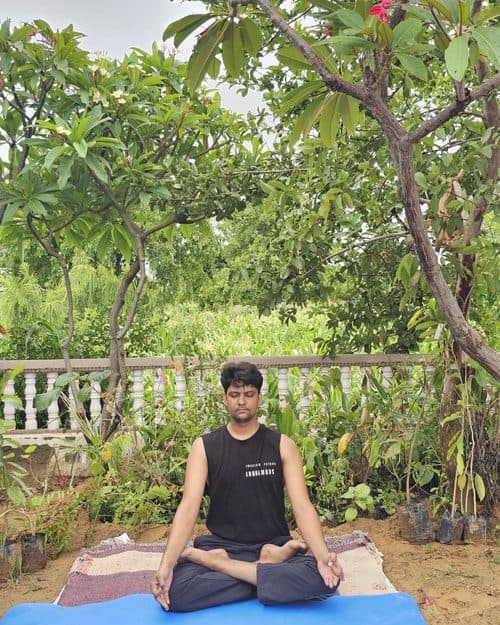
पद्मासन
Each foot rests on the opposite thigh, spine upright — the seat most often described in the texts for meditation and pranayama. Named among meditative asanas in the Hatha Yoga Pradipika.
Considered supportive of steadiness of mind and concentration.
Avoid forcing it with a knee or ankle injury or stiffness — begin with Sukhasana instead.
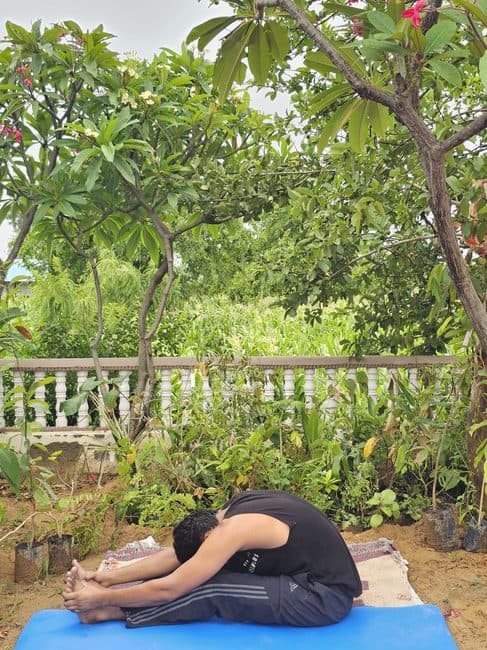
पश्चिमोत्तानासन
Seated with legs extended forward, the torso folds toward the legs, head reaching toward the knees, hands holding the feet. A principal forward bend in the Hatha tradition.
Considered supportive of back and hamstring flexibility, and of digestion.
Check with the vaidya first if you have a significant back injury, a slipped disc, or are pregnant.
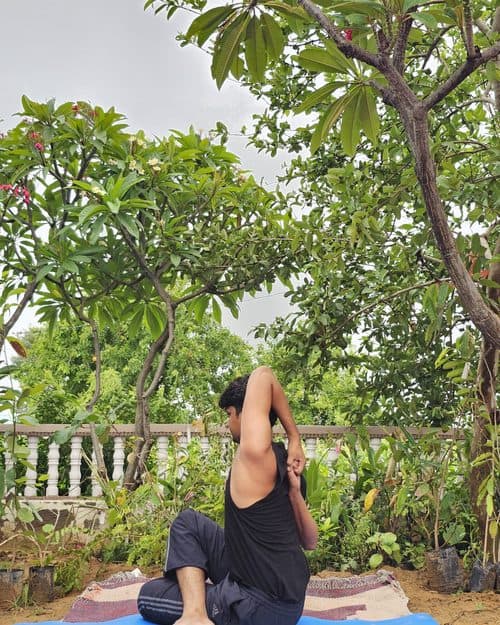
गोमुखासन
One arm reaches up and over the shoulder, the other up from behind the back, fingers clasping between the shoulder blades; legs fold one over the other.
Considered supportive of easing tightness through the shoulders and hips.
With a recent shoulder injury or inflammation, keep the arm position gentle — don't force the clasp.
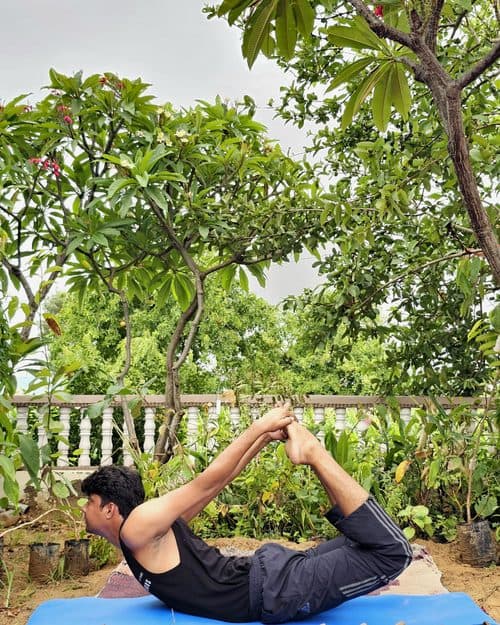
धनुरासन
Lying face-down, both knees bend, hands hold the ankles, and the chest and thighs lift — the body curves into a bow shape.
Considered supportive of back-muscle strength and spinal flexibility.
Avoid with high blood pressure, hernia, pregnancy, or a significant back condition.
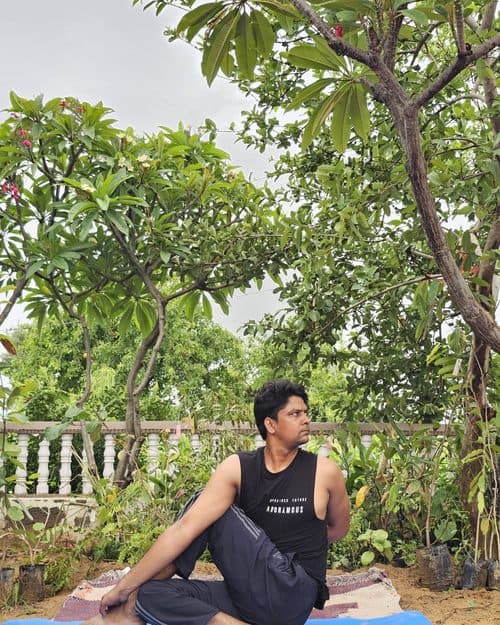
अर्ध मत्स्येन्द्रासन
Seated, one leg folds over the other, and the torso twists toward the bent knee, the opposite arm bracing outside it.
Considered supportive of spinal mobility and of stimulating the digestive system.
Take care with a significant spinal injury or recent abdominal surgery.
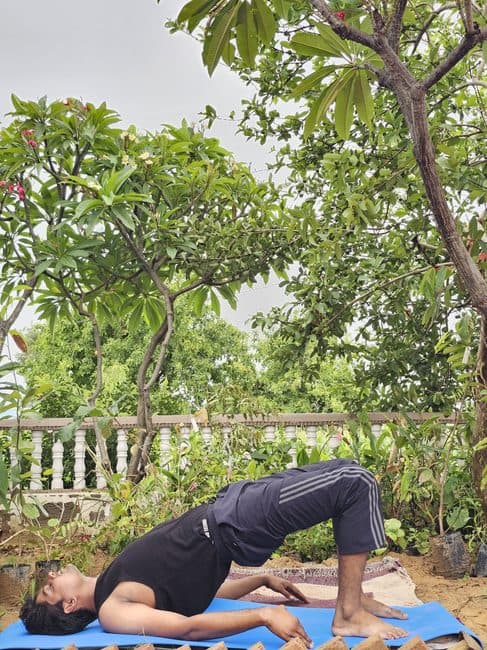
सेतुबंध आसन
Lying on the back with knees bent and feet grounded, the hips lift to form a bridge from shoulders to knees.
Considered supportive of lower-back strength and mental calm.
With a neck or shoulder injury, keep weight off the head and neck.
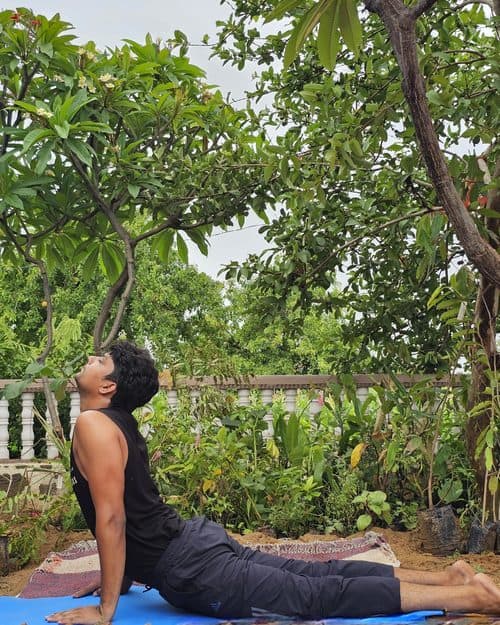
भुजंगासन
Lying face-down with palms under the shoulders, the chest and head lift gently on the arms while the pelvis stays grounded. A foundational backbend in Surya Namaskar and Hatha yoga.
Considered supportive of back-muscle strength and posture.
Take care or avoid during pregnancy, or with a wrist injury or significant back condition.
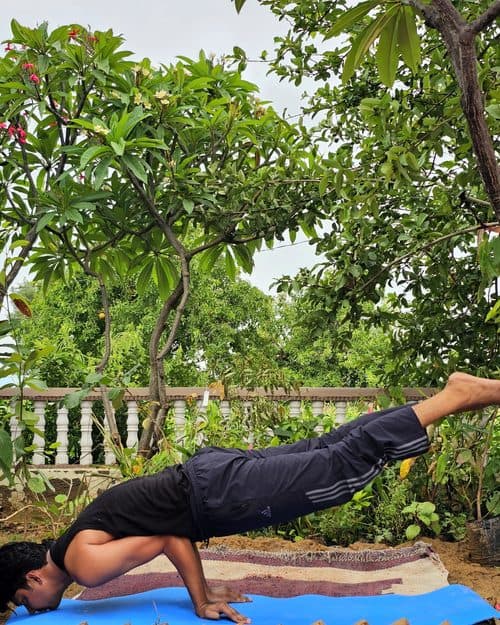
मयूरासन
Palms on the ground with elbows braced near the navel, the whole body balances horizontally in the air — an advanced strength-and-balance pose.
Considered supportive of wrist and arm strength, and of digestive fire.
Avoid with high blood pressure, hernia, or pregnancy, or a wrist/elbow injury; learn it under supervision when starting out.
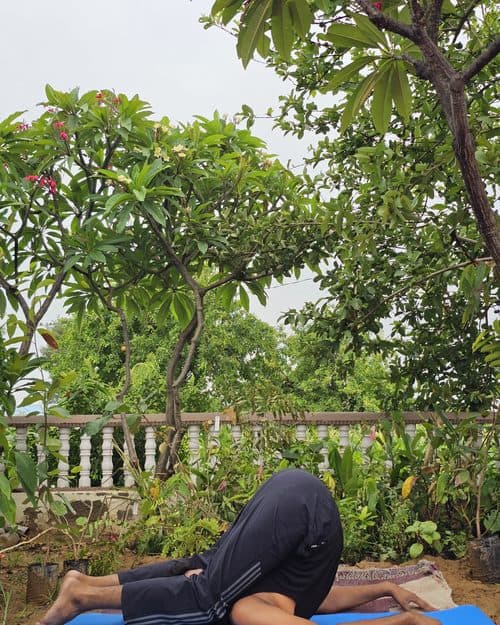
हलासन
Lying on the back, both legs swing up and over the head until the toes touch the ground behind it — the body forms the shape of a plough.
Considered supportive of spinal flexibility and calming the nervous system.
Avoid with a neck injury, high blood pressure, or pregnancy; use support when learning it.
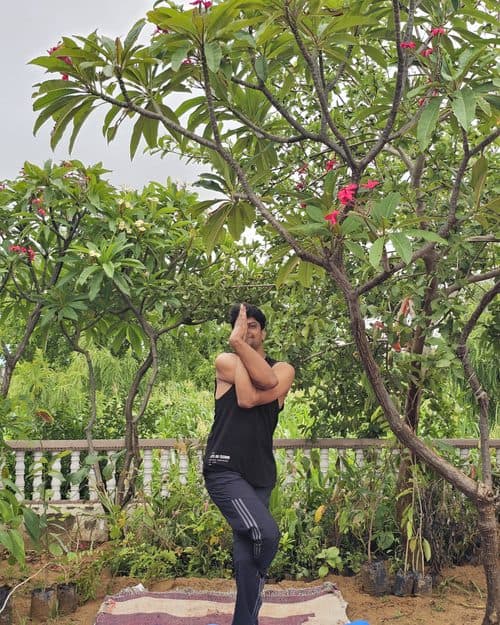
गरुड़ासन
Standing on one leg, the other leg wraps around it, and the arms cross and wrap around each other — a balance pose.
Considered supportive of concentration and ankle-knee balance.
Take care with a recent knee injury — practise near a wall for support.
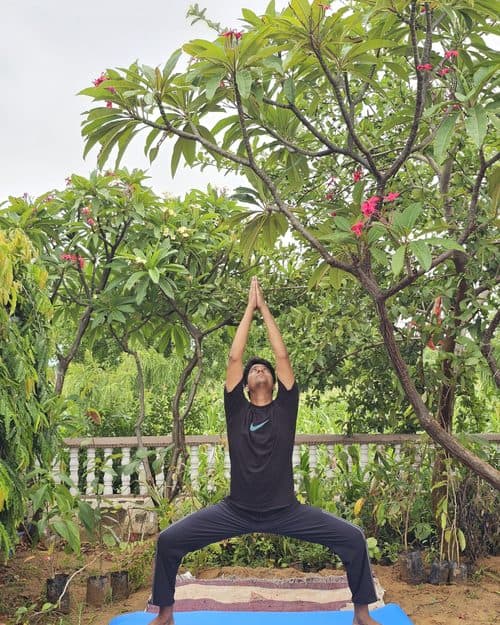
उत्कट कोणासन
Feet wide apart with toes turned out, the knees bend into a low squat while the arms lift, bent at the elbows.
Considered supportive of thigh and hip strength, and breath capacity.
With a significant knee or hip condition, keep the squat shallow.
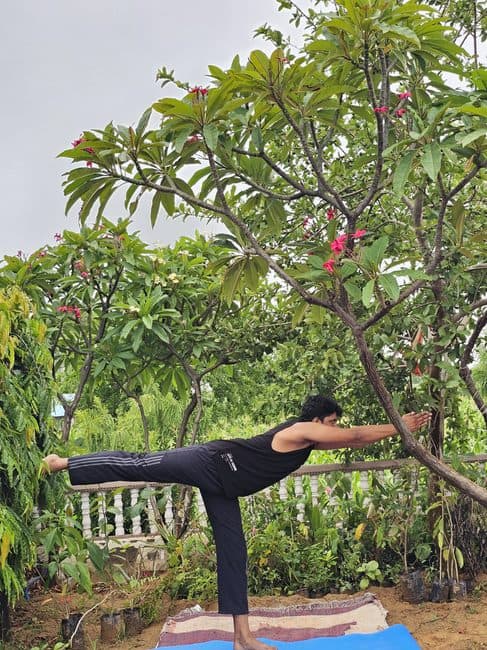
वीरभद्रासन
Balancing on one leg, the other leg extends back and the arms extend forward, parallel to the ground — the body forms a straight line.
Considered supportive of balance, concentration, and leg strength.
With blood-pressure concerns or trouble balancing, practise near a wall or chair for support.
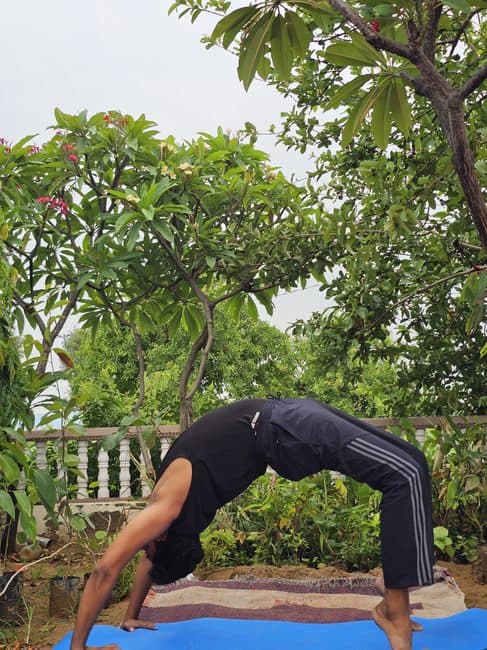
चक्रासन
Lying on the back with palms and feet on the ground, the whole body lifts so the spine arcs backward — a full wheel.
Considered supportive of spinal flexibility and arm-leg strength — for advanced practitioners.
Avoid with a back, wrist, or heart condition, blood-pressure issues, or pregnancy; learn only under a trained instructor.
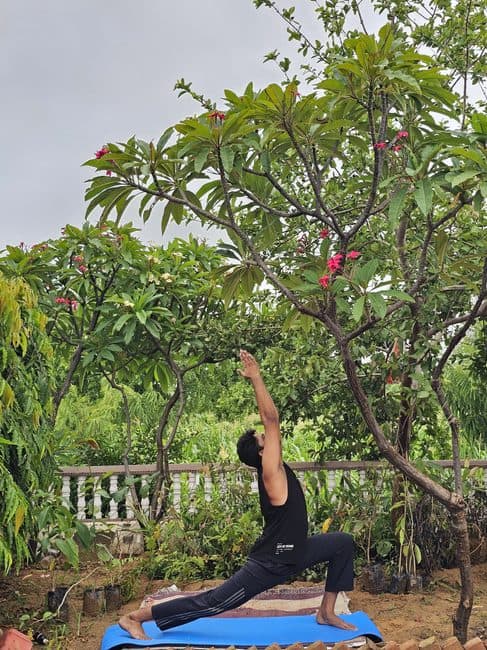
अंजनेयासन
A deep lunge with the front leg bent and the back leg extended straight, the arms reaching upward.
Considered supportive of hip and thigh flexibility, and leg strength.
With a knee injury, keep the front knee from tracking past the toes.
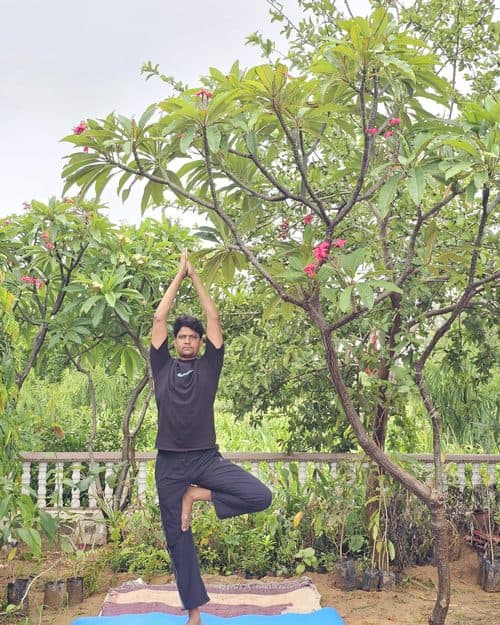
वृक्षासन
Standing on one leg, the sole of the other foot rests against the inner thigh, hands joined overhead in a gesture of prayer.
Considered supportive of balance, concentration, and ankle strength.
With a tendency to dizziness or a knee condition, practise near a wall.
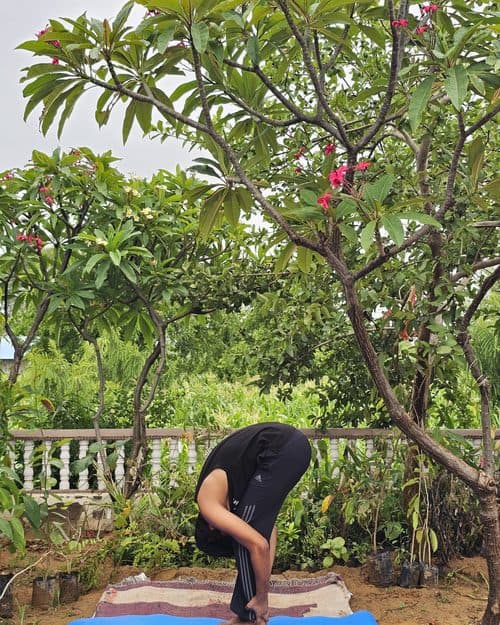
उत्तानासन
Standing, the torso folds forward from the hips, the head hanging toward the knees, hands reaching toward the feet or ground.
Considered supportive of back and hamstring flexibility, and mental calm.
With a back injury or high blood pressure, keep a soft bend in the knees and rise slowly, not suddenly.
Foundational text of yoga philosophy — Ashtanga yoga and the definition of chitta-vritti-nirodha.
By Swatmarama — classical description of asana, pranayama, mudra and bandha.
Brief philosophical introduction to karma, bhakti and raja yoga.
Comprehensive modern reference on asana technique and therapeutic context.
Historical document of asana-pranayama in the Vedic-Hatha lineage.
Classical Ayurvedic mention of exercise, meditation and lifestyle.
Related articles / Knowledge hub
Arogyasudha pillar guides and knowledge pages — condition-wise understanding with classical orientation.