
Yoga therapy · Asana
Paschimottanasana — Seated Forward Bend
पश्चिमोत्तानासन
Seated with legs extended forward, the torso folds toward the legs, head reaching toward the knees, hands holding the feet. A principal forward bend in the Hatha tradition.
वैद्य आदित्य घोसल्या · Reg. No. NR/AY/RJ/0007555 (NCISM)
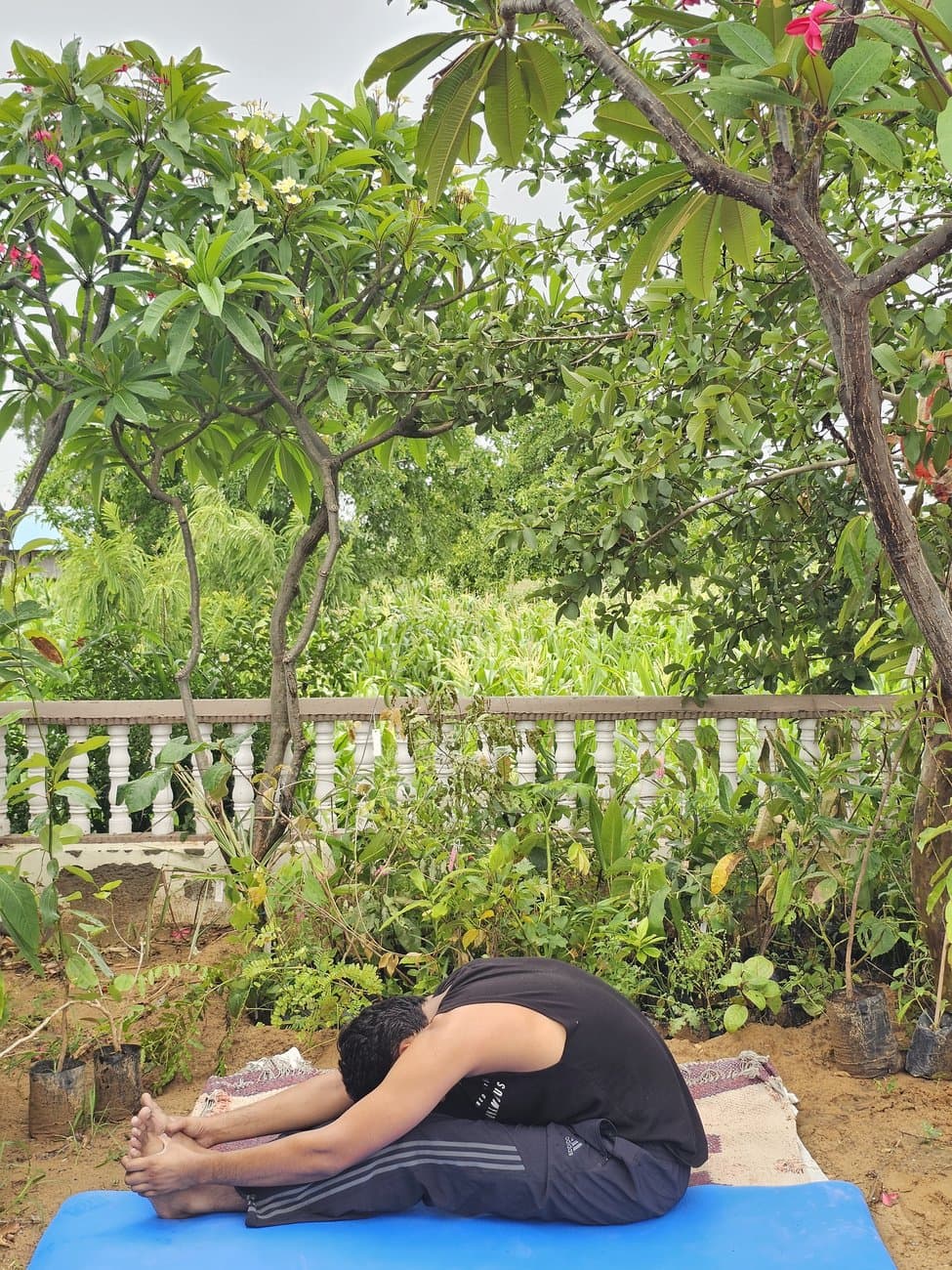
How to practise
- 1.Lay mat on calm, clear space; practise under vaidya/instructor guidance.
- 2.Breathe slowly in Paschimottanasana — no forcing or pain.
- 3.Listen to body sensation; pause or modify on discomfort.
- 4.Rest or Shavasana after practice — return spine to neutral length.
- 5.Regularity per vaidya plan — do not self-practice vigorously daily.
Potential benefits
- Considered supportive of back and hamstring flexibility, and of digestion.
- Considered supportive of hamstring and spinal flexibility — individual response varies.
- In selected cases within yoga therapy plans, considered supportive of breath–mind coordination.
Contraindications
- Check with the vaidya first if you have a significant back injury, a slipped disc, or are pregnant.
- Pregnancy, recent surgery, acute BP — only after asking vaidya.
Precautions
- First time under instructor/vaidya supervision.
- Stop immediately on pain, dizziness or severe breathlessness.
Classical notes
A principal seated forward bend in the Hatha tradition. Charaka's dinacharya context links regular flexible exercise with health-supportive living — not a cure claim. Iyengar emphasises lengthening from the hip, not rounding the upper back aggressively — knees may stay softly bent initially.
Paschimottanasana — overview
Seated with legs extended forward, the torso folds toward the legs, head reaching toward the knees, hands holding the feet. A principal forward bend in the Hatha tradition. On Arogyasudha (/yoga) this asana is educational reference from Dr. Ghosalya's farm shoots — may join yoga therapy plans in selected cases for hamstring and spinal flexibility, after vaidya approval.
Classical context
A principal seated forward bend in the Hatha tradition. Charaka's dinacharya context links regular flexible exercise with health-supportive living — not a cure claim.
Iyengar-style guidance
Iyengar emphasises lengthening from the hip, not rounding the upper back aggressively — knees may stay softly bent initially.
Yoga therapy context — Jaipur
At Arogyasudha yoga therapy (/yoga) in Jaipur–Rampura, Paschimottanasana may be part of a personal plan — vaidya selection for knee, back, stress or concentration contexts. After approval by Vaidya Aditya Ghosalya (MA Yoga, Reg NR/AY/RJ/0007555). No guarantee of cure.
Breath and mind
Patanjali's Yoga Sutras place asana as preparation for pranayama and dhyana — toward chitta-vritti-nirodha. In this pose, slow ujjayi or natural breath; no forceful kapalabhati without vaidya.
Frequently asked questions
Q1.What is Paschimottanasana?
A. Seated with legs extended forward, the torso folds toward the legs, head reaching toward the knees, hands holding the feet. A principal forward bend in the Hatha tradition.
Q2.Daily practice?
A. Per vaidya plan — not vigorous daily self-practice.
Q3.With knee/back pain?
A. Physician assessment required — supportive in some cases, avoided in others.
Q4.During pregnancy?
A. Often modification or avoidance — vaidya direction only.
Q5.Guaranteed results?
A. No — considered supportive; individual response varies.
Educational information — not self-practice or a cure claim. Vaidya/instructor guidance is essential.
Related articles / Knowledge hub
Read more — educational guides
Arogyasudha pillar guides and knowledge pages — condition-wise understanding with classical orientation.