
Yoga therapy · Asana
Mayurasana — Peacock Pose
मयूरासन
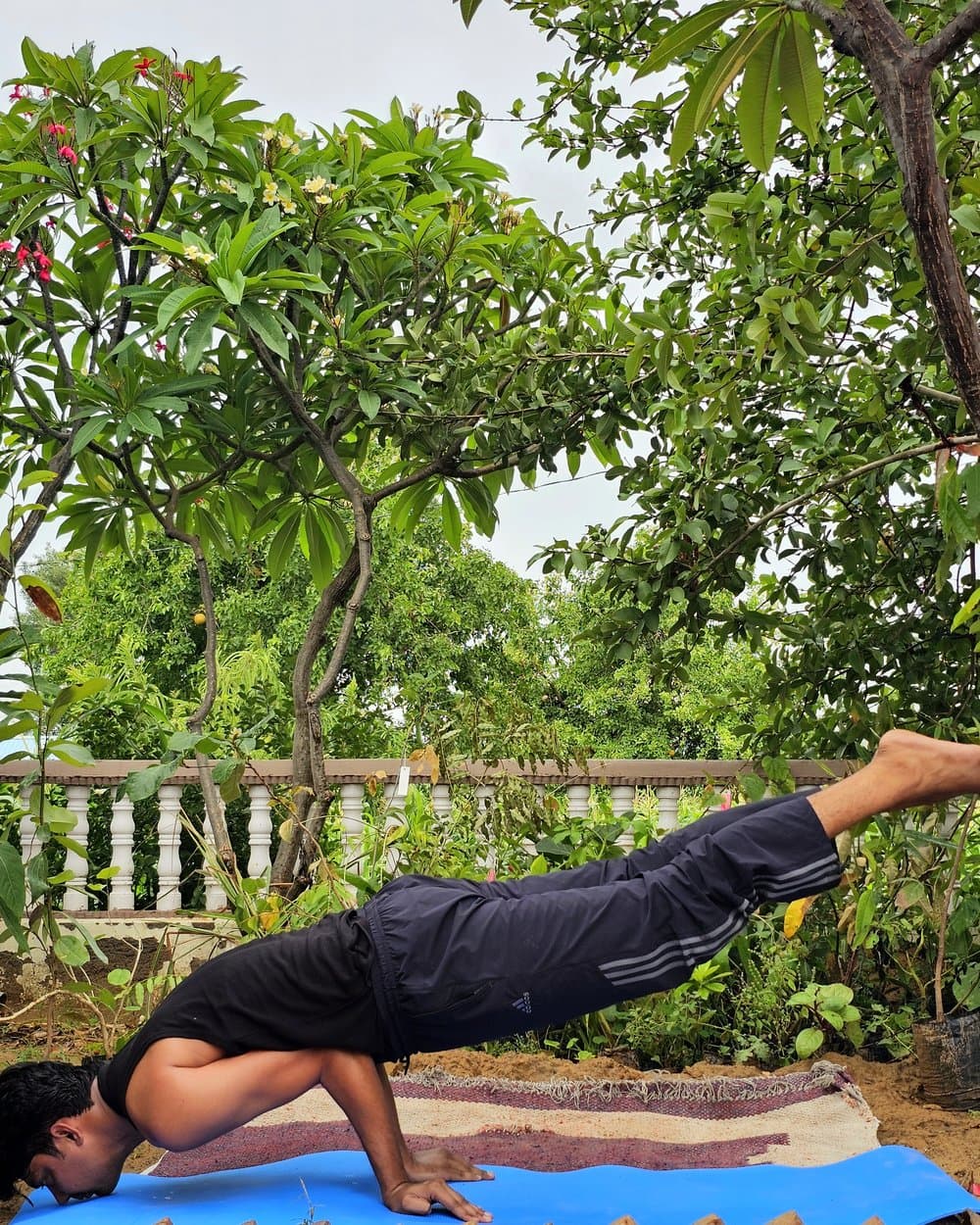
Palms on the ground with elbows braced near the navel, the whole body balances horizontally in the air — an advanced strength-and-balance pose.
वैद्य आदित्य घोसल्या · Reg. No. NR/AY/RJ/0007555 (NCISM)
How to practise
- 1.Lay mat on calm, clear space; practise under vaidya/instructor guidance.
- 2.Breathe slowly in Mayurasana — no forcing or pain.
- 3.Listen to body sensation; pause or modify on discomfort.
- 4.Rest or Shavasana after practice — return spine to neutral length.
- 5.Regularity per vaidya plan — do not self-practice vigorously daily.
Potential benefits
- Considered supportive of wrist and arm strength, and of digestive fire.
- Considered supportive of arm balance and advanced practice — individual response varies.
- In selected cases within yoga therapy plans, considered supportive of breath–mind coordination.
Contraindications
- Avoid with high blood pressure, hernia, or pregnancy, or a wrist/elbow injury; learn it under supervision when starting out.
- Pregnancy, recent surgery, acute BP — only after asking vaidya.
Precautions
- First time under instructor/vaidya supervision.
- Stop immediately on pain, dizziness or severe breathlessness.
Classical notes
Mayurasana — peacock — is listed among advanced Hatha poses requiring arm balance and core strength. Hatha texts link it to digestive fire stimulation — supportive language only. Learn with a teacher; preparatory poses include Chaturanga and forearm strengthening.
Mayurasana — overview
Palms on the ground with elbows braced near the navel, the whole body balances horizontally in the air — an advanced strength-and-balance pose. On Arogyasudha (/yoga) this asana is educational reference from Dr. Ghosalya's farm shoots — may join yoga therapy plans in selected cases for arm balance and advanced practice, after vaidya approval.
Classical context
Mayurasana — peacock — is listed among advanced Hatha poses requiring arm balance and core strength. Hatha texts link it to digestive fire stimulation — supportive language only.
Iyengar-style guidance
Learn with a teacher; preparatory poses include Chaturanga and forearm strengthening.
Yoga therapy context — Jaipur
At Arogyasudha yoga therapy (/yoga) in Jaipur–Rampura, Mayurasana may be part of a personal plan — vaidya selection for knee, back, stress or concentration contexts. After approval by Vaidya Aditya Ghosalya (MA Yoga, Reg NR/AY/RJ/0007555). No guarantee of cure.
Breath and mind
Patanjali's Yoga Sutras place asana as preparation for pranayama and dhyana — toward chitta-vritti-nirodha. In this pose, slow ujjayi or natural breath; no forceful kapalabhati without vaidya.
Frequently asked questions
Q1.What is Mayurasana?
A. Palms on the ground with elbows braced near the navel, the whole body balances horizontally in the air — an advanced strength-and-balance pose.
Q2.Daily practice?
A. Per vaidya plan — not vigorous daily self-practice.
Q3.With knee/back pain?
A. Physician assessment required — supportive in some cases, avoided in others.
Q4.During pregnancy?
A. Often modification or avoidance — vaidya direction only.
Q5.Guaranteed results?
A. No — considered supportive; individual response varies.
Educational information — not self-practice or a cure claim. Vaidya/instructor guidance is essential.
Related articles / Knowledge hub
Read more — educational guides
Arogyasudha pillar guides and knowledge pages — condition-wise understanding with classical orientation.